
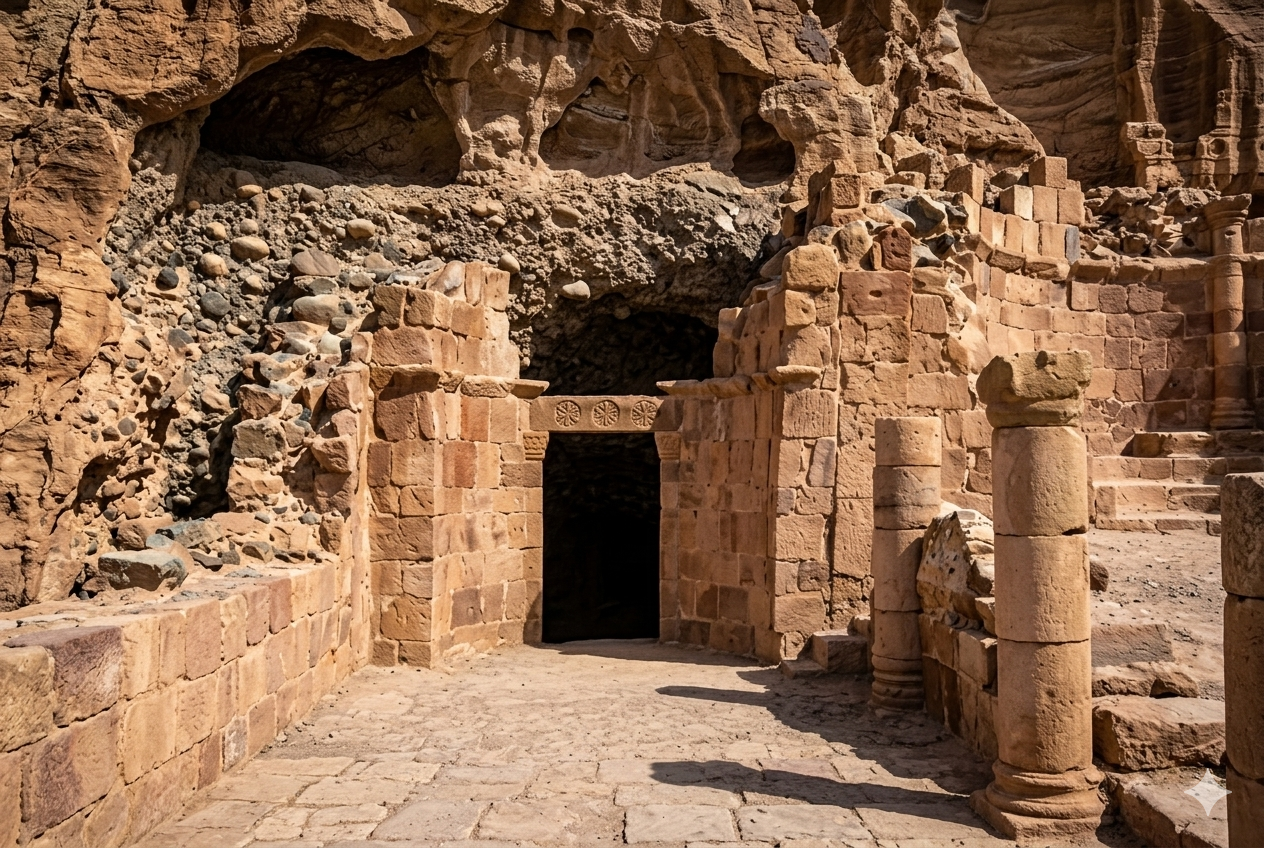
Prophet Lot Cave
Overlooking the Dead Sea and surrounded by the mountains of Al-Karak, Prophet Lot Cave offers a spiritual and historical experience where visitors feel connected to the timeless stories of the prophets and the ancient past of the region.
غور الصافي – محافظة الكرك – الأردن
About the Landmark
Religious Sites
Overlooking the Dead Sea and surrounded by the mountains of Al-Karak, Prophet Lot Cave offers a spiritual and historical experience where visitors feel connected to the timeless stories of the prophets and the ancient past of the region.
Overview
Perched on the mountains overlooking Ghor Al-Safi and the Dead Sea in southern Karak Governorate, the Cave of Prophet Lot is one of Jordan's most significant religious and archaeological landmarks. Revered in religious tradition and enriched by remarkable archaeological discoveries, the site offers visitors a unique blend of spiritual heritage and historical significance.
Through History
According to religious tradition, the cave is associated with Prophet Lot, who is believed to have settled in this area following the events of Sodom and Gomorrah. Archaeological evidence indicates that the site has been occupied since the Early Bronze Age. During the Byzantine period, a monastery and church were constructed above the cave in 606 AD, serving pilgrims and monastic communities. Stone inscriptions and the famous Madaba Mosaic Map confirm the site's importance during this era, while archaeological finds indicate that it remained in use until the early Abbasid period.
Architecture and Identity
The site combines a natural cave with impressive Byzantine religious architecture. Excavations uncovered the remains of a church and monastery built above the cave, featuring beautifully preserved mosaic floors decorated with birds, trees, and animals, along with Greek inscriptions, an altar, a sanctuary, and the bishop's throne. Together, these remains illustrate the site's importance as a major Christian pilgrimage destination while preserving the cave's original natural setting.
Its Significance in Karak
The Cave of Prophet Lot is among the most important religious and archaeological sites in Karak Governorate. It reflects both the spiritual traditions associated with biblical history and the archaeological heritage of southern Jordan. Historical traditions also associate the surrounding area with the origins of the Moabites and Ammonites, further enhancing the site's cultural and historical significance.
Visitor Experience
A visit begins with a scenic drive through the mountains overlooking Ghor Al-Safi, where breathtaking panoramic views of the Dead Sea Valley unfold. Visitors can explore the natural cave, the Byzantine church, ancient mosaics, and archaeological remains while experiencing the peaceful atmosphere that has attracted pilgrims and travelers for centuries. The combination of history, faith, and dramatic landscapes makes the site one of southern Jordan's most rewarding cultural destinations.
Good to Know
- The cave is located in Ghor Al-Safi, southern Karak Governorate.
- The site is traditionally associated with Prophet Lot.
- Archaeological evidence dates back to the Early Bronze Age.
- The Byzantine church was built above the cave in 606 AD.
- The site preserves mosaics, Greek inscriptions, and monastery remains.
- It officially opened to visitors in 2002.
Landmark Photos
Click any image to update the main preview, or open it full size.
Prophet Lot Cave
Click image to enlarge
Gallery images
Scroll horizontally to view all photos
Location on Google Maps
غور الصافي – محافظة الكرك – الأردن
Related Places
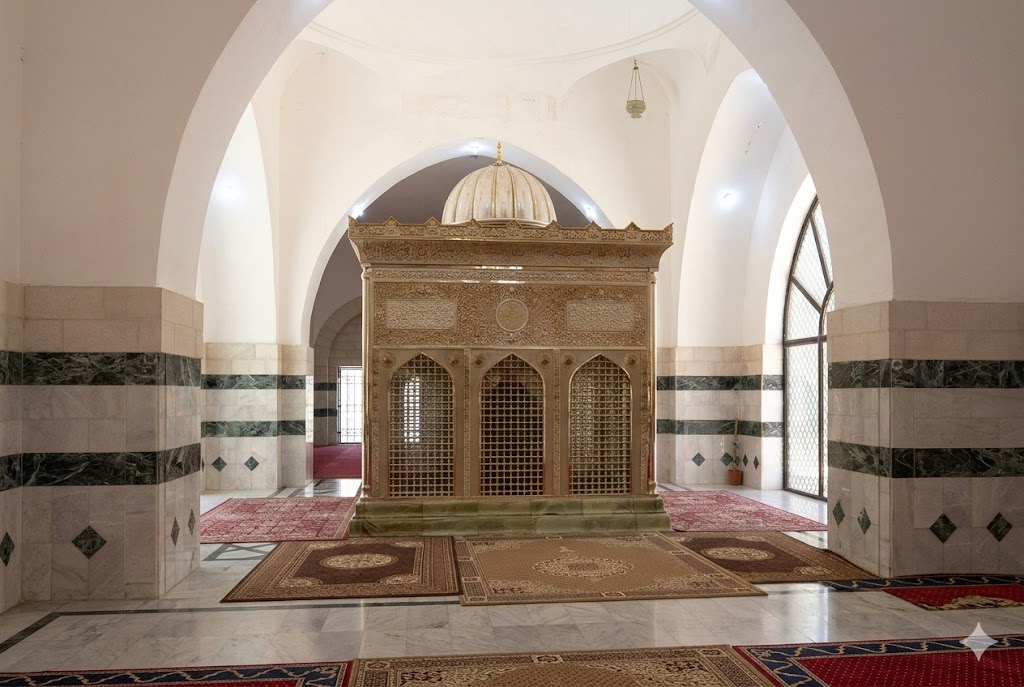
Shrine of Ja'far ibn Abi Talib – Karak
In Al-Mazar Al-Janubi, Karak Governorate, the Shrine of Ja'far ibn Abi Talib preserves the legacy of the Battle of Mu'tah, where spiritual serenity meets the courage and sacrifice of one of Prophet Muhammad's most distinguished companions.
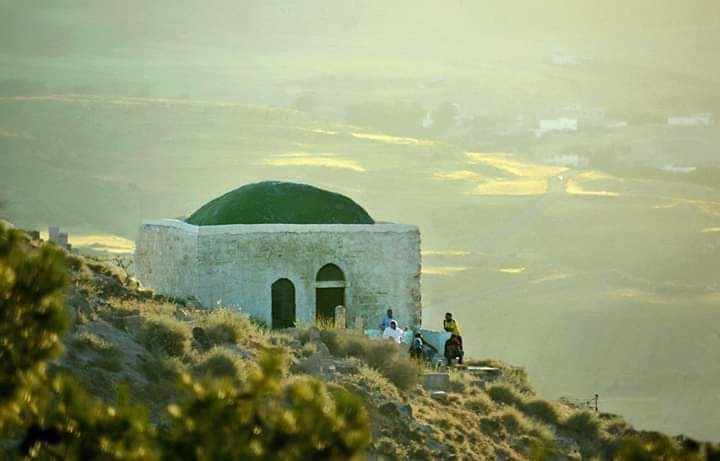
Prophet Noah Shrine
Located within the Old Islamic Cemetery in Karak, the Shrine of Prophet Noah offers a peaceful spiritual setting, preserving the local tradition associated with Prophet Noah and the enduring values of faith and patience.
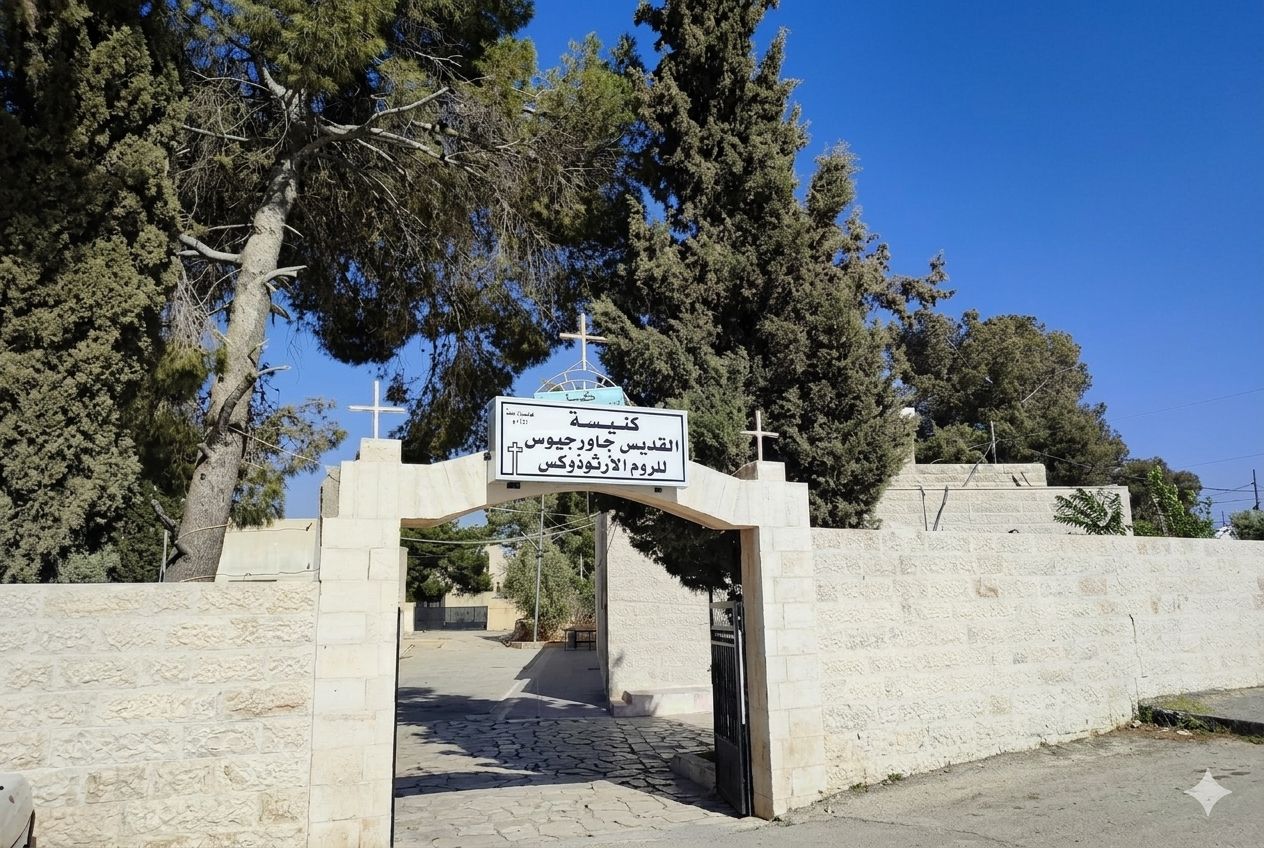
St. George Greek Orthodox Church
In the heart of Old Karak, Saint George Greek Orthodox Church stands as a testament to the city's rich history and spiritual diversity, where religious heritage meets historic architecture in one of Karak's most significant Christian landmarks.
Nearby Restaurants
3
Add this landmark to your trip plan
Use the smart trip planner to design the perfect Karak tour